The AI Act after 27 July 2026: old and new dates on one page
· By Bee Flow · 4 min read
On 27 July 2026 the Digital Omnibus on AI amended the AI Act. The high-risk dates move, transparency still starts on 2 August. A table of old and new dates, what was simplified, what stayed and what to adjust this summer.
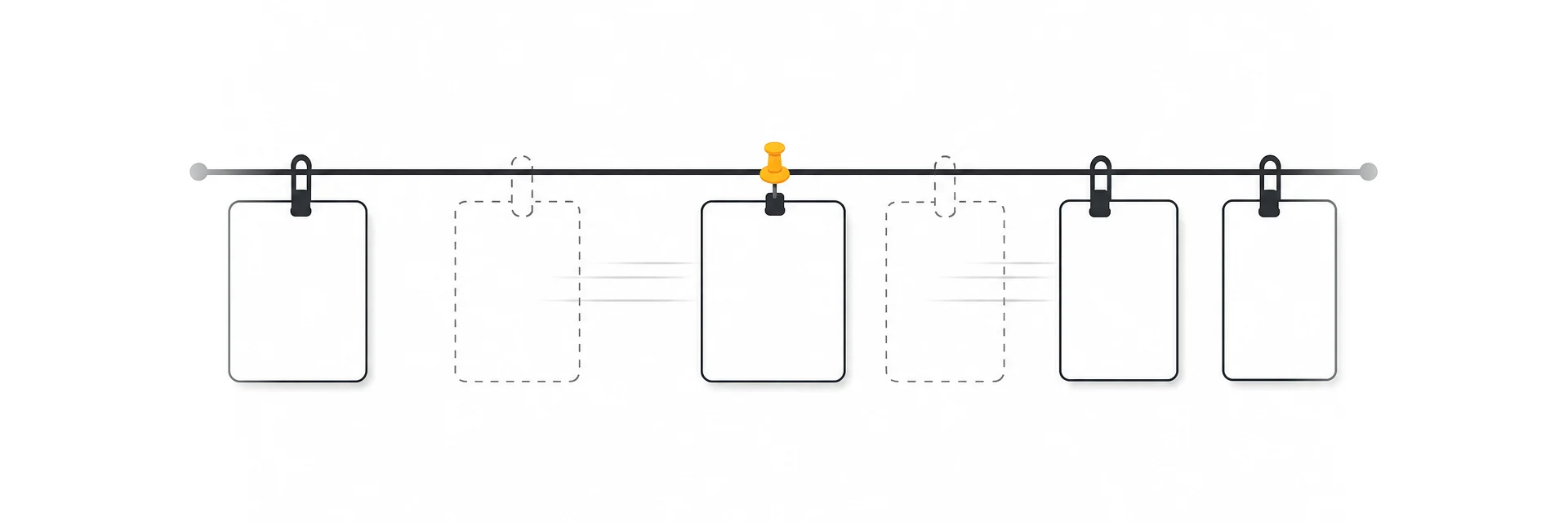
Since Monday 27 July 2026 an amended AI Act applies. That day the Digital Omnibus on AI, Regulation (EU) 2026/1744, entered into force, three days after it appeared in the Official Journal on 24 July (European Parliament, Legislative Train). The European Commission announced it the same day. We wrote about the proposal when it came out on 19 November 2025. The text now in force mostly moves dates.
For a small company that uses AI rather than builds it, the news is smaller than the headlines suggest. What was due to apply on 2 August 2026 for transparency still applies on 2 August, five days from now. What moves are the rules for high-risk AI.
This article is not legal advice.
Old dates and new dates
| What | Was | Now |
|---|---|---|
| Prohibited AI practices (Article 5) | 2 February 2025 | unchanged |
| AI literacy (Article 4) | 2 February 2025 | date unchanged, wording amended |
| Rules for providers of general-purpose AI models | 2 August 2025 | unchanged |
| Transparency rules (Article 50) | 2 August 2026 | unchanged |
| Marking AI-generated content, for systems already on the market before 2 August 2026 | 2 August 2026 | 2 December 2026 |
| New ban on AI that generates non-consensual sexual images, and on AI for child sexual abuse material | did not exist | 2 December 2026 |
| High-risk, Annex III (stand-alone uses such as recruitment, education and biometrics) | 2 August 2026 | 2 December 2027 |
| High-risk, Annex I (AI in products under EU product legislation) | 2 August 2027 | 2 August 2028 |
The new dates come from the AI Act Service Desk timeline and the Legislative Train. The old dates are in the June 2026 briefing by the Parliament's research service and the Service Desk FAQ, the Annex III examples on the Commission's AI Act page.
The Commission's proposal would have tied the high-risk dates to the moment standards and support tools were ready. Council and Parliament chose fixed dates instead (EPRS). That makes planning easier.
What was simplified
According to the Commission, several measures that were meant for SMEs now also cover small mid-caps, companies just too large for the SME definition. The Parliament describes the simplified documentation as extended to medium-sized companies.
Registration in the EU database is lighter for AI systems that a provider concludes are not high-risk because they do a narrow or procedural task. The proposal dropped that registration altogether. The final text keeps a simplified registration (Legislative Train). That mainly concerns providers, not users.
Special categories of personal data may be processed to detect and correct bias in AI systems, under a standard of strict necessity (Legislative Train). The GDPR still applies alongside it.
The AI Office also gets more oversight of systems built on general-purpose models and of AI in very large online platforms and search engines, and there will be a regulatory sandbox at EU level (Commission).
On AI literacy, briefly: the Article 4 duty has applied since 2 February 2025 and stays, but the Commission calls the requirement for companies simplified, with a larger role for the Commission and the Member States. A training plan you already had remains useful.
What did not change
The prohibited practices of Article 5 have applied since 2 February 2025 and are still there. In February we looked at them from an employer's side. The rules for providers of general-purpose models have applied since 2 August 2025 and were not postponed.
The transparency rules of Article 50 apply from 2 August 2026. According to the Service Desk timeline, enforcement at national and EU level also starts that day for the prohibitions, the transparency rules, AI literacy and the rules for general-purpose models.
The GDPR does not change with this regulation. The second omnibus from November 2025, on the GDPR and data rules, is a separate file (EPRS).
What to adjust in your planning this summer
- Keep 2 August 2026 where it is. Check where customers or others talk to a chatbot or AI agent, and where you publish content made with AI. Article 50 is about AI that interacts with people or generates content (Service Desk FAQ).
- Move the high-risk milestone to 2 December 2027 (Annex III) and 2 August 2028 (Annex I). Do not take the work out of the plan. If you use AI in recruitment, you now have sixteen extra months to get it right.
- Update your AI inventory: which tool, for what, and who the provider is. You need that list to decide whether anything falls under Annex III.
- Ask the vendors of generative tools when their marking of AI-generated content will be in place. For systems already on the market, the deadline is 2 December 2026.
- Add the new ban of 2 December 2026 to your AI policy, under what staff may not do. A one-page AI policy has room for it.
- If you are just above the SME threshold, check whether your company counts as a small mid-cap.
What the AI Act asks of a small company overall is in the AI Act for small companies.
Our view: do not read the delay as a reason to wait. It concerns the heaviest obligations, and those hardly touch most small companies that only use an AI chat. What does touch them starts on Sunday.
Where Bee Flow helps
An AI inventory is shorter when your team works in one workspace instead of a scatter of tools. In Bee Flow the administrator chooses which models are available, from the large cloud providers to a model hosted in Europe or a local model on your own server. Privacy Shield recognises personal data in a message and stops it before the message reaches the model, in every licence. In automations you can add an approval step, so a person decides before anything goes out. See how that works on Privacy & Security, or book a call.