The proposed Cloud and AI Development Act: four assurance levels, and questions for your suppliers
· By Bee Flow · 5 min read
On 3 June 2026 the European Commission proposed the Cloud and AI Development Act, with four assurance levels for cloud services sold to public bodies. What the proposal says, and which of its questions a small company can put to its own suppliers now.
On 3 June 2026 the European Commission presented a tech sovereignty package. One part of it is the Cloud and AI Development Act, CADA for short (the proposal and its annexes). It is a proposal: according to the press release, the European Parliament and the Council will negotiate it first, and only then is there a law.
As a small company you have almost nothing to do under this text. What is worth your time are the questions Brussels wants to put to cloud providers. You can put the same questions to your own suppliers this week.
Four assurance levels for cloud services
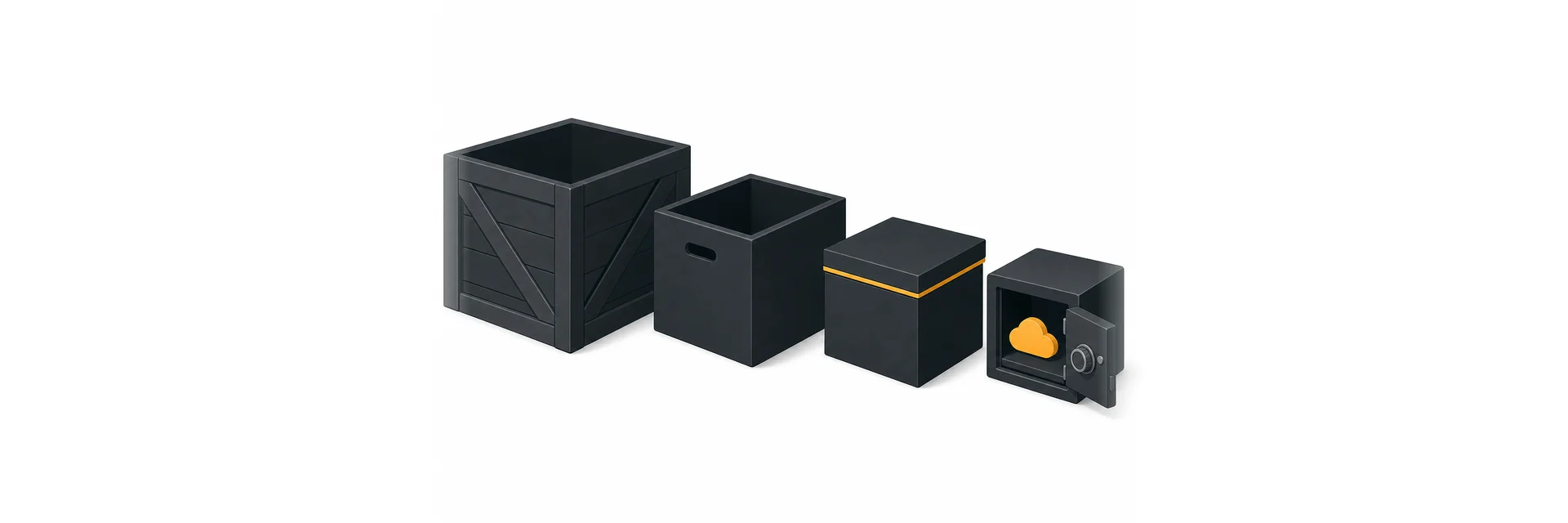
The core is in Article 16 and Annex II. The Commission proposes four "Union assurance levels" that a cloud service has to meet before it can serve EU institutions and public sector bodies.
Level 1 is the base. The provider is established in the EU, its infrastructure and that of its subcontractors is in the EU, and customer data stays in the EU, "including metadata and telemetry data", before, during and after use, unless the public body asks otherwise. The provider is fully transparent about its subcontractors, and support outsourced outside the EU has to stay traceable. A self-assessment with a public statement of conformity is enough for this level (Article 19).
Level 2 is checked by an outside auditor and asks more. Staff are in the EU too, and support happens only inside the EU. Data generated by using the service is not used to train an AI system run by a party outside the EU. For security-relevant components from makers outside the EU, there is a documented migration plan "in the event that the vendor fails or a third country imposes restrictions". A provider controlled from a country outside the EU can reach this level if it shows that the country cannot reach customer data and cannot disrupt the service.
Level 3 asks for European control and staff who are EU citizens. An exception is possible for providers from countries the Commission designates (Article 18). Level 4 goes furthest and also asks for effective control over how the software in use is developed and maintained.
What public buyers would have to do
The levels get their weight through procurement. Under Article 29, member states carry out a risk assessment within a year of entry into force and every two years after that. In it they decide which public tasks that use cloud contribute to public order, for example in the NIS2 sectors, defence or justice, and which level fits them.
Article 30 draws the line. Public bodies whose tasks are not marked that way use cloud services recognised at level 1 or higher. Bodies whose tasks are marked that way buy only services at level 2, 3 or 4. There are exceptions, for instance when no recognised service exists or the cost would be disproportionate. A body that has to switch after its risk assessment gets at most twelve months to do so.
Companies outside the public sector are not covered. Article 31 says organisations in the NIS2 sectors of high criticality may carry out a similar assessment, and that the Commission can later make it mandatory for such sectors. If you supply an energy company or a hospital, keep an eye on that.
Data centre zones
The proposal also aims to triple data centre capacity in Europe within five to seven years, according to the press release. Every member state where data centres are being built designates at least one "data centre acceleration zone" within six months of entry into force (Article 10). Reusing existing industrial sites is preferred over new land. Each zone gets an aggregated baseline permit, and the permit procedure for a project in such a zone may take no longer than twelve months (Article 13).
For most small companies this is background for later choices.
Under Article 48 the regulation would apply one year after it enters into force. Everything above can still change in the negotiations. This article is not legal advice.
Questions you can ask now
The questions in Annex II were written for public buyers, and they fit the supplier of your accounting package, your mail or your AI chat just as well. We would take these six:
- Where is the company established, and where are the servers, including those of subcontractors?
- Does our data stay in the EU, and does that include metadata and telemetry?
- Who provides support, from which country, and can that person see our data?
- Which subcontractors are involved? Ask for the list.
- Is what we do in the service used to train an AI model, and if so, whose model?
- What happens if you stop or are no longer allowed to deliver? How do we get our data back, and in what format?
A supplier does not need to give the strictest answer to every question. A web shop has different risks from an accounting firm holding client files. The point is to know the answers before you need them. The sixth question belongs in a continuity plan for your AI tools. On where such a service can run, we wrote earlier about hosting in Europe.
Our view: do not wait for the final text to ask these questions. Do wait with big decisions that lean on the exact levels, because those can still move in Brussels.
What Bee Flow does here
With AI tools the questions about establishment, data and training are often the hardest, because everything you type goes to a language model. You can run Bee Flow on your own server or have it hosted in Europe, so conversations and documents sit in a place you choose. Per organisation you decide which model answers: a local model on your own hardware, a provider hosted in the EU, or a large cloud model. The Privacy Shield looks for personal data in a message and, by default, holds the message back before it reaches the model. Self-host or EU cloud explains how that works. If you want to put the six questions to us as well, get in touch.