Where your AI data goes, and who can reach it: data sovereignty in 2026
· By Bee Flow · 10 min read
Stored in Europe says little about who can reach your prompts, documents and recordings. What the CLOUD Act, the GDPR and the Data Privacy Framework mean in late 2026, and the steps a small company can take.

On 10 November 2026 Microsoft updated the page that lists which data still leaves its EU Data Boundary. Near the bottom is a paragraph about Anthropic's Claude models in Copilot. If you switch them on, the page says, customer data is processed by Anthropic in the United States and continues to be stored in the EU Data Boundary. The same page says the models come inside the boundary starting in December 2026.
That one paragraph is what this article is about. Stored in Europe and processed in Europe are two different promises. And even when both hold, there is still the question of which country's law the provider answers to.
What follows is the state of things in 2026, for the privacy officer or IT lead at a Dutch small company. This article is not legal advice.
Where the data goes when someone uses an AI assistant
A language model can only answer text it can read. So whatever an employee asks the assistant to do ends up, somewhere, as readable text at a model. In an office that usually means four flows.
Prompts. The question itself, often with a pasted customer e-mail or a passage from an HR file, plus the earlier messages in the conversation. All of that goes to the model again on every turn.
Uploaded documents. The text is pulled out of the PDF or spreadsheet and sent along with the question.
Meeting recordings. A recording goes first to a speech-to-text service, and the transcript then goes to a model that writes the summary. Those can be two different providers, and the transcript holds the words and names of everyone at the table. How that works with us is in automatic meeting notes.
Knowledge bases. Documents are cut into pieces and turned into vectors, often by a separate model. For every question the system looks up the matching passages and sends them to the chat model. More in a knowledge base from your own documents. In Bee Flow a knowledge base can also read a folder in Nextcloud, OneDrive or Google Drive as the person who added it, so the source documents stay where they are (integrations).
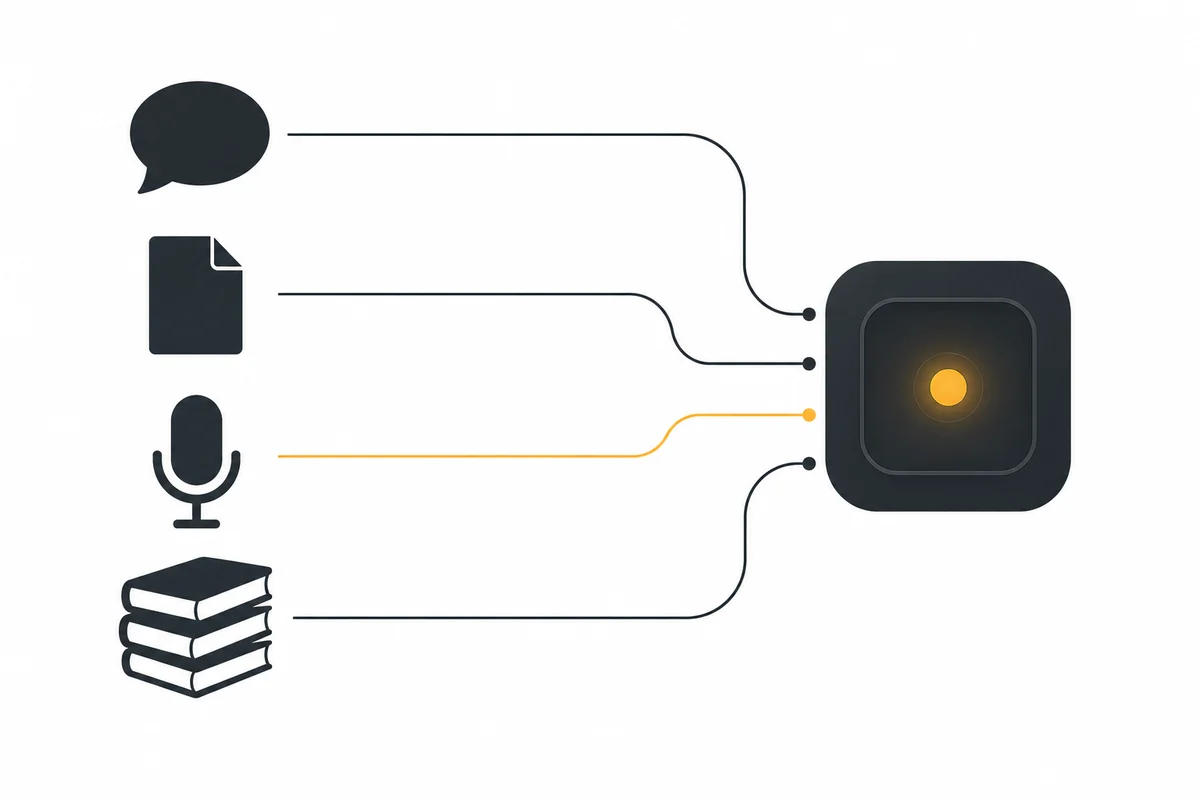
So for each flow there are three questions. Where is it stored, where is it processed, and which company does that, under which law.
Two US laws that do not look at location
The CLOUD Act of 2018 added section 2713 to the US Stored Communications Act. A provider of communication or cloud services must preserve or disclose data within its "possession, custody, or control", regardless of whether that data is located inside or outside the United States. The test is who controls the data, not where the data centre stands.
Then there is Section 702 of FISA, the basis on which US intelligence agencies collect communications of non-US persons abroad with the help of US providers. The statute lapsed in June 2026 without a renewal. According to a statement by Representative Alma Adams of 15 June 2026, the certifications the FISA Court approved earlier remain in effect through March 2027, and companies must keep handing over information under them.
What that means in practice was on the record in the French Senate on 10 June 2025. Under oath, the director of public and legal affairs at Microsoft France was asked whether he could guarantee that French citizens' data would never reach US authorities without French consent. His answer is in the Senate's minutes: "Non, je ne peux pas le garantir, mais, encore une fois, cela ne s'est encore jamais produit." No, he could not guarantee it, though it had never happened. He added that Microsoft checks every request, rejects unfounded ones and asks to be allowed to notify the customer.
What the GDPR says in return
Article 48 of the GDPR (the AVG in Dutch) says that a judgment or decision from a country outside the EU requiring the transfer of personal data is only recognised if it is based on an international agreement, such as a mutual legal assistance treaty. Europe's data protection authorities, together in the EDPB, worked this out in guidelines adopted on 4 June 2025. In the EDPB's reading such foreign orders cannot automatically be enforced in a member state. If an organisation in the EU answers one anyway, that is a transfer which must itself meet the GDPR.
For a US provider with a European data centre the two systems can collide. What happens next is up to the provider, and in the end a court. The customer is not in the room.
The Data Privacy Framework: valid, and under pressure
Personal data may go to the US without extra safeguards when the receiving company is certified under the EU-US Data Privacy Framework (DPF). On 3 September 2025 the EU General Court dismissed an action to annul it. The court confirmed that on the date of the decision the US ensured an adequate level of protection. It also pointed out that the European Commission has to monitor US law continuously and may suspend, amend or repeal the decision if that law changes.
On 29 June 2026 something changed. In Trump v. Slaughter the US Supreme Court held that the rule allowing FTC commissioners to be removed only for cause is contrary to the separation of powers. The next day noyb, the organisation of Max Schrems, asked the Commission in a letter for an "orderly exit" from the framework and said it also plans to go to court. On 31 July 2026 the EDPB wrote that the adequacy decision explicitly refers to the independence of the FTC, and asked the Commission to closely assess whether the ruling affects how the decision functions.
On 27 August 2026 the Dutch government answered questions from parliament. The Commission had told the member states that the decision remains in force until further notice. The government does not want to form its own view before the Commission is done. If the DPF falls, the same answer says, transfers will need another GDPR instrument, such as standard contractual clauses. In the Netherlands the Autoriteit Persoonsgegevens, the Dutch data protection authority, remains the competent supervisor.
So in early November 2026: the DPF applies, the EDPB has asked for it to be looked at again, and noyb has announced a court case. If you rely on the DPF, now is a good time to know which of your suppliers do and what the fallback is.
What "EU data residency" and "sovereign cloud" promise, in the vendors' words
Microsoft has committed to store and process customer data for its enterprise cloud services within the EU and EFTA, "subject to limited circumstances" in which data still leaves the boundary. The page with those circumstances says, among other things, that remote access by personnel outside the boundary counts as a transfer even when the data stays in the European data centre, and that security teams process limited data worldwide. On 30 April 2025 Microsoft also pledged to challenge "any government demand for EU public sector or enterprise customer data" where it has a legal basis to do so.
Amazon Web Services launched the AWS European Sovereign Cloud on 15 January 2026, a cloud "entirely located within the EU", operated only by EU residents, under a parent company and subsidiaries in Germany. The press release speaks of "sovereign assurances, and legal protections" and says nothing about requests from foreign governments. The Dutch government looked at this in answers of 24 April 2026. A study it refers to found US access to customer data with that service unlikely, "maar zeker niet ondenkbaar" (but certainly not unthinkable). The government's conclusion: there is no question of full sovereignty.
What we take from this: read, service by service, what exactly is promised. Storage, processing, access by staff, the AI models on top and the law of the parent company are five separate questions. The Copilot paragraph at the top shows that the answer can differ per part. How Bee Flow and Copilot compare on these questions is on Bee Flow vs Microsoft Copilot.
The Dutch government sets its own bar higher
On 3 July 2026 the Dutch cabinet adopted a revised cloud policy for central government (in Dutch). It applies to central government organisations, except Defence and the High Councils of State, not to companies. It does show the bar a large organisation now sets for itself.
All information is stored and processed within the European Economic Area and Switzerland. E-mail and documents may not be processed in the public cloud unless three strict conditions are met. Vital and essential organisations are advised against suppliers that fall partly under a jurisdiction outside the EU or EEA. For confidential data, key management preferably does not sit with the cloud supplier but in-house or with another certified party. Existing use gets a transition period of four years.
For a small company none of this is an obligation, but it is a useful yardstick, especially with government customers.
The ladder for a small company
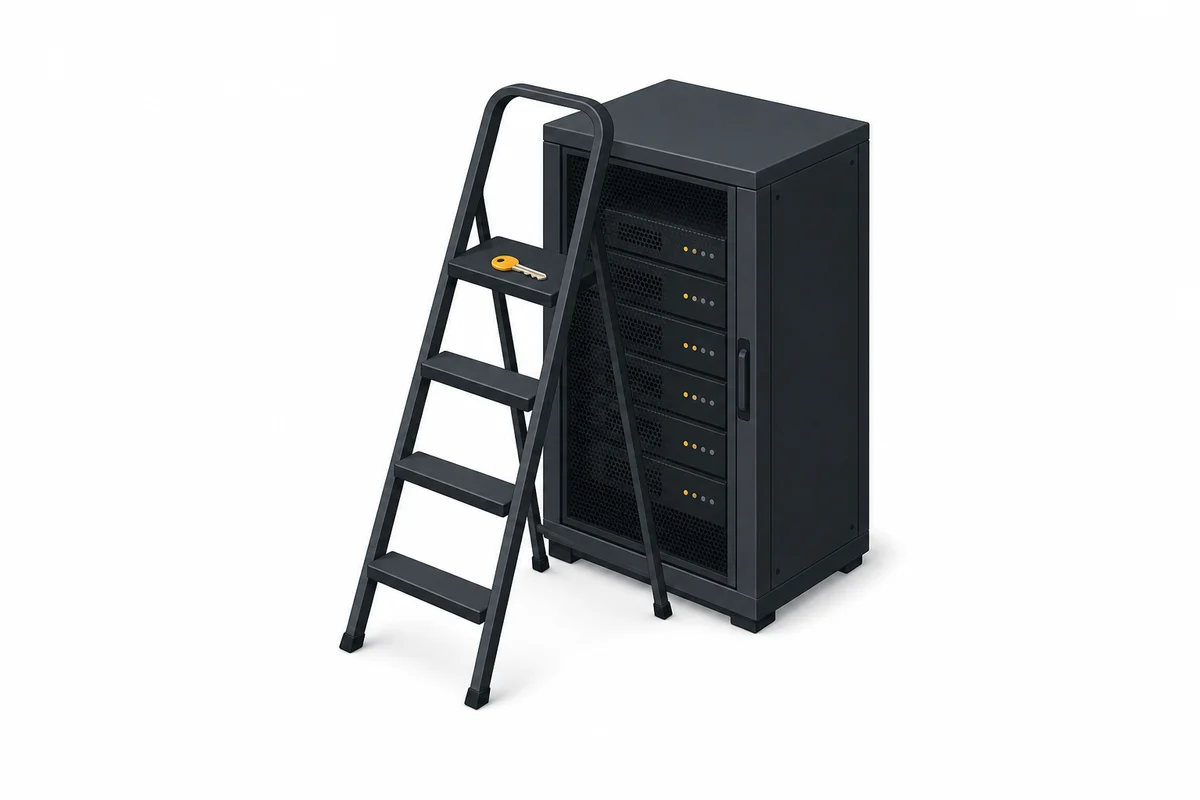
Not every company needs every step. These are the rungs as we see them, from light to heavy.
First, map what happens. For each AI tool, list the four flows: prompts, documents, recordings, knowledge base. For each, note who stores it, who processes it, in which country, and under which law the parent company falls. If you already have a DPIA, add this to it.
Then pick a model that runs in Europe, at a European provider. Mistral, Scaleway, IONOS and EU GPT are examples, each with its own quirks. That lowers the chance that the party reading your text falls under a foreign law. Check the parent company and the subcontractors too. In Bee Flow, Mistral, Scaleway, IONOS and EU GPT are built-in providers, and an administrator picks the model per tier or per agent (the platform).
Put it in a data processing agreement, with the list of sub-processors and the countries where they process. Ask too what the provider does when a foreign government asks for data. The answer tells you a lot.
Move the workspace onto your own server. Conversations, documents, transcripts and the knowledge base then sit on hardware you run, or rent from a European host. The language model can stay in the cloud or run on your own hardware as well. What each set-up involves is on self-host or EU cloud.
Encrypt where the provider cannot read. This is where the conversation often goes wrong. Encryption with keys you hold protects stored data from whoever provides the storage. A language model has to read text to answer it, so whatever you send to a model is readable by that model's provider. What does help is sending less: taking personal data out before the question leaves, or running the model yourself.
Where we would start
Start with the knowledge base and the meeting recordings, not with the chat. That is where the most information sits together, and where it is least visible which providers read along. Once you know where those two flows go, the rest fills in quickly.
What Bee Flow does here
With Bee Flow you decide, for each flow, where it is stored, where it is processed and which company does that. You install it on your own server, or we run it for you in the EU, so conversations, documents, transcripts and knowledge bases are stored where you choose. You pick the model for the whole organisation or per agent: a large cloud model, an open model at a European provider, or a model on your own hardware. Privacy Shield checks chat messages and attachments on your own server before they reach the model, and by default holds back a message that contains personal data, in every licence including the free one (how that works). Replacing that data with a placeholder and putting it back in the answer is also possible, as is a zero-knowledge option for stored content next to the managed keys every organisation starts with (which licence includes what is on the plans). Both encryption options use AES-256-GCM per organisation and protect what is stored, while Privacy Shield and your choice of model decide what a model provider gets to read. Where each of the four flows goes in Bee Flow is written out on where your data goes. How it fits together is on privacy and security, and if you want to walk through your own four flows with us, get in touch.